The National Agricultural Land Development Authority (NALDA) has unveiled an ambitious carbon-credit initiative designed to strengthen rural economies and increase earnings for farmers across its expanding network of mega farm estates.
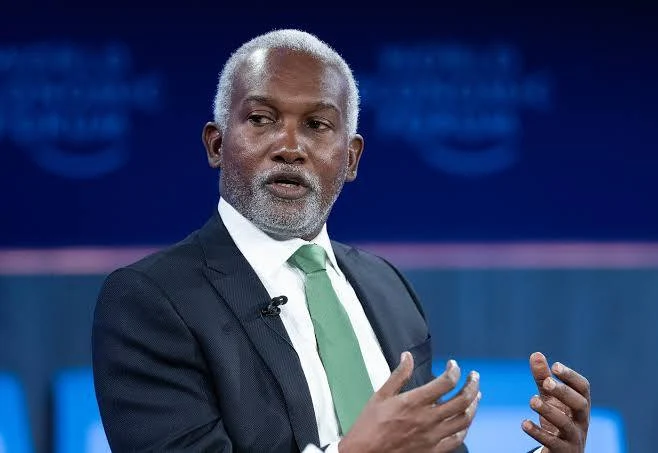
Speaking at a COP30 side event in Belém, Brazil, NALDA’s Executive Secretary/CEO, Cornelius Adebayo, said the agency’s new strategy is intentionally crafted to advance both climate goals and national development priorities.
Adebayo explained that structured tree-planting and large-scale reforestation—integrated directly into the Renewed Hope Mega Farm Estates—will enable farmers to benefit from global carbon markets alongside their regular agricultural income.
“Our goal is simple. We want to move Nigerians from a low-income bracket to a true middle-class economy,” he said.
“By combining agricultural productivity with carbon-credit earnings, farmers can become independent, prosperous, and globally competitive.”
Under the estate model, each farmer receives five hectares within developments that range from 5,000 to 25,000 hectares. These settlements come equipped with full mechanisation support, internal roads, irrigation systems, processing centres, energy infrastructure and perimeter fencing lined with thousands of climate-resilient trees cultivated specifically for certified carbon removal.
NALDA also presented its Plantation Carbon Roadmap, which places more than 20,000 hectares of restored plantations under internationally recognised Monitoring, Reporting and Verification (MRV) systems—an approach intended to guarantee transparency and integrity within the global voluntary carbon market.
The side event attracted climate negotiators, development institutions, investors and international observers, all of whom assessed NALDA’s model linking agricultural expansion with climate-finance opportunities.
“NALDA is building a carbon-credit framework that uplifts communities. Every credit earned must translate into improved incomes, restored landscapes and strengthened food systems,” Adebayo added.
The agency confirmed it signed new cooperation agreements at COP30 to expand verification capacity, align carbon registries and strengthen global partnerships for future credit generation.